

After 49 years, Nasa’s Voyager 1 is one light-day away from us. Can we save this ‘pale blue dot’? | Kim Heacox
Attributed to The Guardian. ENC is not independently verifying these facts.
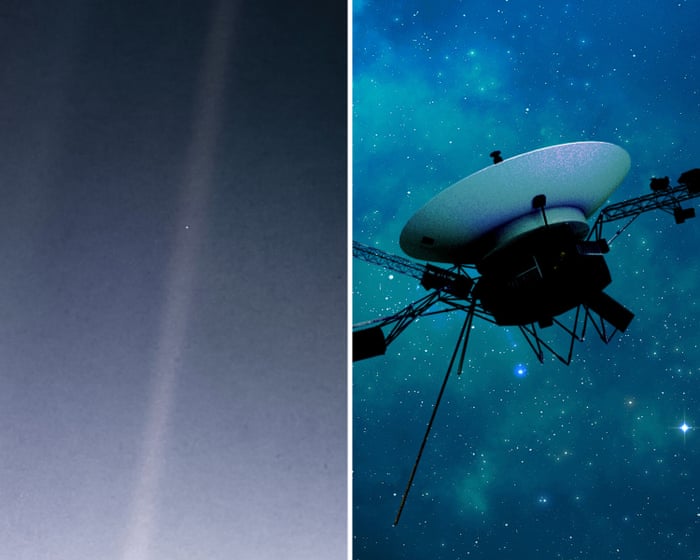
Still from the source feed, not produced by ENC.
https://www.theguardian.com/commentisfree/2026/nov/18/nasa-voyager-1-pale-blue-dot
ENC Summary
Single-source
The Guardian is currently the only allowlisted source on the desk for this item.
Missing information
- No second independent outlet is on the desk for this item yet.
What to watch next
- Whether the original outlet issues a correction or update.
- Whether a second independent allowlisted outlet publishes on the same development.
- Whether later excerpts change the numbers or the framing.
Claim states describe the source record, not independently verified truth. Green and cyan never mean “confirmed.”
Supporting passage from source
Since the spacecraft’s 1977 launch, our wonderful and terrible species has done great damage to our planet. Voyager has offered us a clear view of ourselves Imagine traveling nonstop for 49 years, alone in the dark with no destination in sight, powered by curiosity and engineering. Further imagine making that journey not at bullet train or jet plane speed, but much faster: at 37,800 miles per hour, free from friction in a vast sea of cold, soundless space, bombarded by radiation and cosmic rays yet still able to communicate with folks back home. Continue reading...
More on Wildlife
Same topic on this desk, not a claim that these outlets agree. Each keeps its own original link.
Reader discussion
Comments are public only after review. Keep personal thoughts private in your saved items.
Sign in to join the discussion