


Like dinosaur eggs in the sand: the pterosaur museum built to thrive in the Gobi desert
Attributed to The Guardian. ENC is not independently verifying these facts.
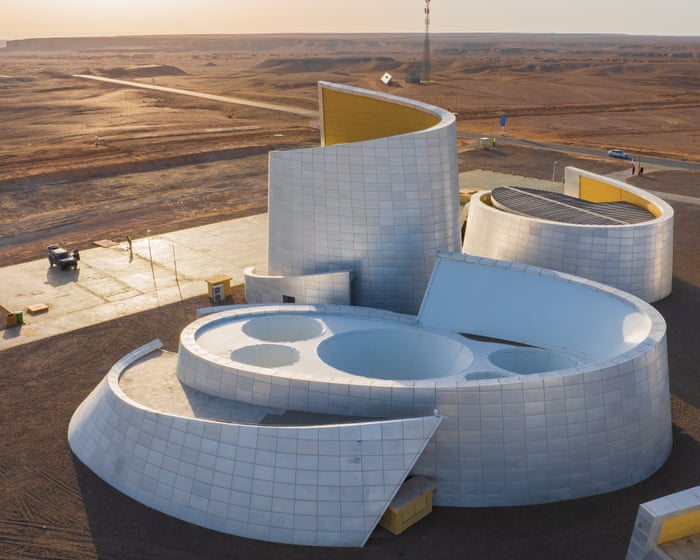
Still from the source feed, not produced by ENC.
https://www.theguardian.com/environment/2026/oct/16/dinosaur-eggs-pterosaur-museum-built-gobi-desert
ENC Summary
Single-source
The Guardian is currently the only allowlisted source on the desk for this item.
Missing information
- No second independent outlet is on the desk for this item yet.
What to watch next
- Whether the original outlet issues a correction or update.
- Whether a second independent allowlisted outlet publishes on the same development.
- Whether later excerpts change the numbers or the framing.
Claim states describe the source record, not independently verified truth. Green and cyan never mean “confirmed.”
Supporting passage from source
How architects worked with harsh environment to create sustainable building in location where fossils were found Viewed from afar, the silver-hued Hami Pterosaur Museum almost looks like a space base on Mars. Viewed from above, it resembles a collection of dinosaur eggs in the sand. Nestled in the Gobi desert, in north-west China, the new tourist attraction showcases hundreds of impressive fossils of pterosaurs, ancient flying reptiles related to dinosaurs. But far from reflecting its prehistoric exhibits, the building itself is a modern-day architectural specimen. Designed with underground exhibition halls, giant light funnels and sprawling solar farms, the museum is able to operate sustainably while withstanding an extremely harsh environment. Continue reading...
More on Energy
Same topic on this desk, not a claim that these outlets agree. Each keeps its own original link.
Reader discussion
Comments are public only after review. Keep personal thoughts private in your saved items.
Sign in to join the discussion